Chapter 4 · Medical & First Aid
The first five minutes: what to do when someone is hurt
Most first aid is decided before you touch anyone: is it safe, who calls 911, is the person awake and breathing, and is anything bleeding badly? Here is the order the Army, FEMA's CERT program and the Red Cross teach, and the reason for each step.
Read first: Start here
When to call 911
Call 911 (or your local emergency number), or have someone else call, if the person:
- doesn't respond, or responds but isn't fully awake (American Red Cross)
- isn't breathing, or is only gasping (start CPR; see CPR and AEDs)
- has bleeding that won't stop or another obvious life-threatening problem (see severe bleeding)
- has any potentially serious illness or injury. The 2024 American Heart Association and American Red Cross first aid guidelines say to call immediately in that case and stay with the person until trained help arrives, as long as it's safe
When in doubt, call. The call-taker can help you decide, and can talk you through what to do.
When someone is hurt, the urge is to rush in. The sources this page draws on, the U.S. Army's first aid manual (ATP 4-02.11), FEMA's Community Emergency Response Team (CERT) manual and the American Red Cross, all slow you down for a few seconds first, then move fast in a set order. The order exists because a few things kill in minutes (heavy bleeding, a blocked airway, no breathing) and almost everything else can wait for the ambulance.
This page covers those first minutes, for any emergency. The specific skills each have their own page: severe bleeding, CPR and AEDs, choking and shock.
The order at a glance
| Step | What you do | Why |
|---|---|---|
| 1. Look before you go in | Check the scene for danger | If you are hurt too, there are two patients and no helper |
| 2. Protect yourself | Gloves or another barrier | Blood and body fluids can carry disease |
| 3. Check the person | Shout, tap, shout; look for breathing and heavy bleeding, in no more than 10 seconds | Tells you whether this is a CPR, bleeding or "talk to them" emergency |
| 4. Call 911 | Or point at someone and tell them to | Help needs a head start; first aid only buys time |
| 5. Treat what kills first | Stop heavy bleeding; CPR if not breathing; recovery position if unresponsive but breathing | These kill in minutes |
| 6. Check the rest, and stay | Ask what happened, look head to toe, keep them warm and calm | Finds hidden injuries and slows shock |
Steps 3 to 5 often happen at once if there are two of you: one calls while the other works.
Step 1: Look before you go in
The Red Cross's first step is to check the scene for safety and form an initial impression. Stop the Bleed puts it more bluntly: your safety is your first priority, because if you are injured you can't help anyone else. If the scene changes or becomes unsafe, stop, move to safety, and take the injured person with you if you can.
CERT, which trains volunteers for disasters, suggests asking yourself a few quick questions: Do I feel safe here? Should I move somewhere safer, or can I stay and start care now? If I leave, can I take anyone with me?
CERT's full size-up has nine steps, built for a disaster: gather facts, assess the damage, consider what could happen next, assess your own situation, set priorities with life safety first, decide, plan, act and keep evaluating. At a single accident the same thinking takes a few seconds: what happened, how many people are hurt, what could still hurt me, and what do I do first?
Step 2: Protect yourself
Blood and body fluids can carry disease, so put something between your hands and the person's. The Red Cross includes personal protective equipment in its first step. CERT says gloves are best, and if there are none, a cloth or even a plastic bag will do. Its manual asks volunteers to wear non-latex exam gloves and change them between patients.
CERT's rule is simply to use whatever barrier you have. Afterward, Stop the Bleed says to clean any skin the blood touched and tell a health care provider that you were exposed, then follow their advice. Keep a few pairs of gloves in every kit (see first aid kit).
Step 3: Check the person
Ask first
CERT teaches a short approach: if the person is conscious, make sure they can see you, say who you are, and ask permission to help. The Red Cross includes obtaining consent in its first step. CERT says an unconscious person is assumed to give implied consent, so you can help them, and that for a child you should ask a parent or guardian if one is there.
Are they awake?
If the person looks unresponsive, the Red Cross teaches shout-tap-shout: call to them, tap them, and call again. The Army's version is to gently shake them and ask, "Are you OK?" At the same time, look for breathing, for heavy bleeding, and for anything else obviously life-threatening.
The Red Cross says to keep this check to no more than 10 seconds. It's a first look, not an examination.
Are they breathing normally?
Look at the chest and face. You are looking for regular, normal breathing. The Red Cross says CPR is for someone who is unresponsive and not breathing or only gasping. Gasping, occasional noisy breaths, is not normal breathing, and it is not a reason to wait.
Two ways of checking breathing
ATP 4-02.11 still teaches the older "look, listen and feel": watch the chest rise and fall, put your ear near the mouth to hear air, and feel it on your cheek. The Red Cross's civilian course frames it as a quick check, within its 10-second limit, for normal breathing versus none or only gasping, with the scene, responsiveness and bleeding all checked together. Whichever you learned, keep it quick: the Red Cross limit is 10 seconds.
Is anything bleeding badly?
Heavy bleeding is part of the Red Cross's first check, and the Army treats it as the first priority of all after an injury: its treatment sequence starts with massive bleeding, before airway or breathing, because a torn artery can kill in as little as three minutes. ATP 4-02.11 teaches a fast "blood sweep," looking and feeling over the neck, armpits, groin, arms, legs and back. Stop the Bleed warns that clothing can hide life-threatening bleeding and that there may be more than one wound.
Step 4: Call 911
The Red Cross says to call 911 and get equipment (a first aid kit, and an AED if there is one), or tell someone else to, if the person:
- doesn't respond, or responds but isn't fully awake
- isn't breathing, or is only gasping
- has life-threatening bleeding or another obvious life-threatening condition
For someone who is awake and doesn't seem to be in danger, the Red Cross has you finish your check first and then call if it's needed.
Give the call-taker what you found. Stop the Bleed's advice is to know your location and follow the instructions the 911 operator gives. CERT tells volunteers to give the operator the information from their size-up, whose first questions are what happened, how many people are involved, what the situation is now and what hazards are present. The list below is our gathering of those two sources into one checklist; the last-but-one line, what you've done, is our own addition, because CERT has volunteers report it to responders when they arrive.
What to tell 911
- Where you are: street address, or cross streets, mile marker or landmarks
- What happened: fall, crash, cut, collapse, burn
- How many people are hurt
- What you see: awake or not, breathing or not, bleeding heavily or not
- Any danger still at the scene: fire, power lines, traffic, gas
- What you've done so far
- Then follow the call-taker's instructions
If other people are around, the Red Cross's "or tell someone to do so" means you can keep working while someone else makes the call and another fetches the kit or an AED.
CERT was built for disasters, when professional responders may be slow to arrive; its volunteers are trained to give life-saving care until they do. For keeping in touch and getting news when phones are unreliable, see radio services and NOAA weather radio.
Step 5: Treat what kills first
What you do next depends on what the check found.
Not breathing, or only gasping: CPR
The Red Cross says to start CPR and use an AED right away for someone who is unresponsive and not breathing. Lay them on their back on a firm, flat surface; the 2024 guidelines likewise say anyone who needs CPR should be positioned on their back. If you aren't trained in full CPR, the Red Cross's hands-only CPR is pushing hard and fast in the center of the chest, at least 2 inches deep and 100 to 120 times a minute, letting the chest come back up each time. The full technique, and how an AED works, are in CPR and AEDs. If an awake person can't speak, cough or breathe, see choking.
Bleeding heavily: stop it
Press hard on the wound. If it is deep, pack it; if a limb keeps bleeding, use a tourniquet. The steps are in severe bleeding. When the injured person is breathing and the bleeding is the problem, this comes first.
Unresponsive but breathing normally: the recovery position
An unconscious person on their back can choke on their own tongue, blood or vomit. ATP 4-02.11 explains that when the muscles relax, the tongue can slide back and block the windpipe, and that the recovery position lets blood and mucus drain out of the nose and mouth rather than back into the airway, and protects against breathing in vomit. CERT gives the same reason.
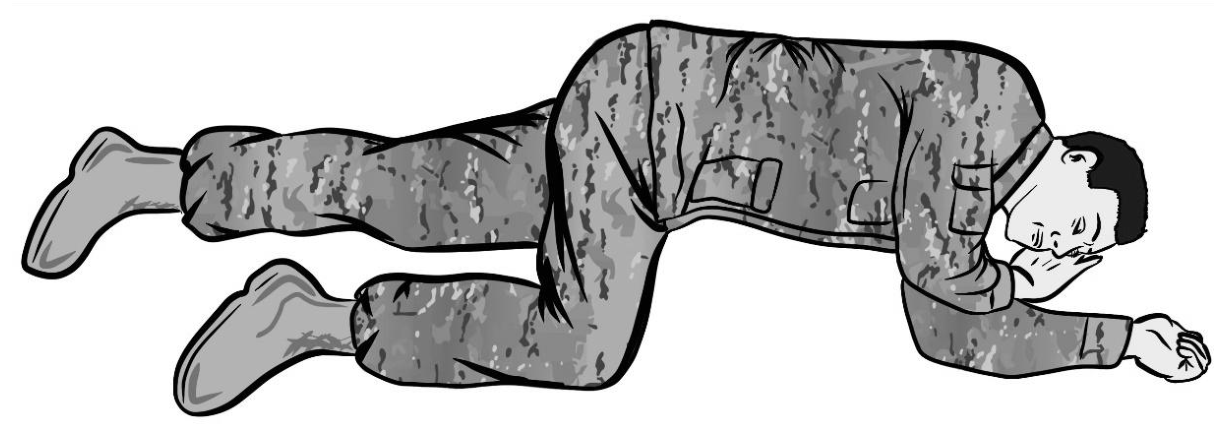
Fig. 5-7 from U.S. Army ATP 4-02.11, Casualty Response, Tactical Combat Casualty Care, and First Aid (23 March 2026), p. 65. Public domain; cropped. Not endorsed by the U.S. Army or Department of Defense.
The 2024 AHA and Red Cross guidelines say the recovery (side-lying) position is reasonable for a person whose alertness is reduced, from something other than an injury, and who is breathing normally.
How to roll someone into it, from ATP 4-02.11 and CERT:
- Kneel beside them and straighten their legs.
- Move the arm nearest you up, straight, above their head; lay the other arm along their side.
- Support the head and neck with one hand. With the other, grasp them under the arm.
- Roll them toward you in one steady pull, keeping head, neck and back in line, so the body doesn't twist.
- Settle the position: on their side, top hand under the cheek or chin, top leg bent to stop them rolling, chin forward and mouth pointing down so fluid can drain.
- Keep watching their breathing and check for other injuries. If breathing stops, roll them onto their back and start CPR.
If an injury to the head, neck or back is possible, take more care. CERT says the risk to the spine from the recovery position is very small but real, so support the head and neck while rolling and move the person no more than necessary. ATP 4-02.11 says to roll someone lying face down as a single unit so the body doesn't twist. The Red Cross says not to ask someone to move at all if you suspect a head, neck or spine injury. More is in head, neck and spine injuries.
Awake and breathing: let them choose
ATP 4-02.11 and CERT agree: a conscious person will usually find the position that is best for their injuries, so let them, and help if they need it. The 2024 guidelines say an awake person having trouble breathing should be allowed to sit in whatever position is most comfortable, usually sitting up. CERT describes the "tripod" position, sitting or standing and leaning forward with hands on the knees, as a natural way to open the chest.
Step 6: Check the rest, and stay with them
Once nothing is about to kill them, slow down.
- Ask. The Red Cross says to interview an awake person (or bystanders) about SAM: signs and symptoms, allergies, and medications and medical conditions. Look for a medical ID tag or bracelet.
- Check where it hurts. The Red Cross calls this a focused check, based on what they tell you and what you see. Don't ask them to move if a head, neck or spine injury is possible, or to move anything that hurts.
- Keep them warm. The 2024 guidelines say to protect injured or ill people from getting too hot or too cold. CERT says to put something between the person and the ground, remove wet clothing, wrap them in dry layers and block the wind. This matters most after blood loss; see shock.
- Watch for shock: confusion, pale and clammy skin, a fast and weak pulse, fast breathing. CERT warns that a person in early shock can seem completely fine.
- Reassure them. CERT says a calm, reassuring presence helps a great deal and needs no special skill.
- Stay. The 2024 guidelines say to remain with the person until trained rescuers arrive, as long as it is safe, and the Red Cross says to keep checking for anything else that needs care.
- Hand over. CERT tells volunteers to give arriving responders detailed information from their size-up. Tell them what happened, what you found and what you did, including the time any tourniquet went on.
What not to do
- Don't rush into danger. A second casualty helps no one.
- Don't spend more than about 10 seconds on the first check before calling or starting CPR (Red Cross).
- Don't wait to call because the person "seems OK" after a serious fall, crash or blood loss.
- Don't move someone with a possible spinal injury more than you must (CERT), and if you have to roll them, roll them as one unit (ATP 4-02.11).
- Don't sweep blindly inside the mouth of an unconscious person. ATP 4-02.11 says to remove an object you can see, but not to dig for one you can't, which can push it deeper.
- Don't leave an unresponsive person on their back if they are breathing and you have to step away; use the recovery position.
- Don't leave them alone if you can avoid it.
Getting ready before it happens
The first five minutes go better when they aren't the first time. CERT's manual tells its volunteers to keep gloves and basic first aid supplies ready for a disaster, and its kit lists include non-latex exam gloves.
Ready for the first five minutes
- Gloves in every kit: house, car, go-bag
- A first aid kit and a bleeding-control kit where everyone in the house knows to find them (first aid kit, trauma kit)
- A written list of each person's medicines, allergies and conditions, kept with the kit
- Your address posted where a visitor or babysitter can read it out to 911
- The nearest AED at work, school and church: know where it is
- Adults in the house trained in CPR and bleeding control
Gloves and a small kit belong in your 72-hour kit and bug-out bag too. If you're just starting on preparedness, the start here page puts this in order with water, food and power.
Where to get trained
Ten minutes of reading won't hold up under stress the way a few hours of hands-on practice will.
- American Red Cross first aid, CPR and AED classes teach the check-call-care sequence on this page. Find one from the Red Cross first aid steps page.
- American Heart Association Heartsaver First Aid CPR AED courses follow the 2024 first aid guidelines cited here.
- Stop the Bleed (American College of Surgeons) teaches pressure, packing and tourniquets, usually in 90 minutes or less: Stop the Bleed training.
- CERT (FEMA) trains neighbors to size up a scene, control bleeding, open airways and treat shock in a disaster, when professional help may be hours away. The participant manual shows the whole course.
Sources
- American Red Cross — First Aid Steps
- American Red Cross — How to Perform CPR: Adult CPR Steps
- American Red Cross — Hands-Only CPR for Adults
- American Heart Association — 2024 Guidelines for First Aid: Implications for Training (Heartsaver)
- FEMA — CERT Basic Training Participant Manual (2019), Units 1–4
- U.S. Army — ATP 4-02.11, Casualty Response, Tactical Combat Casualty Care, and First Aid (2026), Chapters 4–6
- American College of Surgeons — Stop the Bleed Course v2.0, lay public presentation (2019)
- American College of Surgeons — Stop the Bleed: Get Trained