Chapter 4 · Medical & First Aid
Head, neck and spine injuries
Most bumps to the head are minor, and most concussions get better within a couple of weeks. A few are not, and the signs that separate them are specific. With the spine, the first aid is mostly restraint: keep the person still unless staying put is more dangerous than moving.
Read first: First five minutes
When to call 911
After a bump, blow or jolt to the head or body, the CDC says to call 911 or go to an emergency department right away for any of these:
- A headache that gets worse and doesn't go away
- Weakness, numbness, poor coordination, convulsions or seizures
- Repeated vomiting or nausea
- Slurred speech or unusual behavior; confusion, restlessness or agitation
- One pupil larger than the other, or double vision
- Not recognizing people or places
- Passing out, getting more and more drowsy, or not being able to wake up or stay awake
- In babies and toddlers, also: crying that can't be comforted, or refusing to nurse or eat
Also call 911, and don't move the person, if a neck or spine injury is possible: a fall, a car crash, a hard blow to the back, someone found under debris, or numbness, tingling, weakness or loss of movement anywhere (ATP 4-02.11, FEMA CERT). An open head wound or clear fluid or blood from the nose or ears is an emergency too (ATP 4-02.11).
The brain and spinal cord are the two parts of the body that first aid can protect but can't repair. A blow to the head can bruise or bleed inside the skull with no wound to show for it. A break in the neck or back can leave bone fragments sitting against the spinal cord, and a careless move can do the damage the fall didn't. This page covers concussion and other head injuries, how to tell when one needs emergency care, when to suspect a spine injury, why the first rule there is to keep still, and what recovery from a concussion looks like.
How common this is
The CDC counts more than 69,000 deaths related to traumatic brain injury (TBI) in the U.S. in 2021, about 190 a day. The CDC lists falls, firearm injuries, motor vehicle crashes and assaults as the most common causes, and falls lead to nearly half of TBI hospitalizations. Older adults are more likely than any other age group to be hospitalized or die after one.
Spinal cord injuries have similar causes. The NICHD, citing the National Spinal Cord Injury Statistical Center for injuries since 2005, puts motor vehicle crashes at 40.4%, falls at 27.9%, violence at 15%, sports at 8%, and other or unknown causes at 8.5%.
For a household, that means the most likely scenes are ordinary ones: a fall down the stairs or off a ladder, a car crash, a child's sports collision. In a disaster add collapsed buildings and debris, which is where FEMA's CERT manual concentrates.
Concussion
What it is
The CDC defines a concussion as a type of traumatic brain injury caused by a bump, blow or jolt to the head, or by a hit to the body that whips the head and brain rapidly back and forth. That motion can stretch and damage brain cells and cause chemical changes in the brain. ATP 4-02.11 calls concussion the most common closed head injury, meaning one with no break in the skull. Its main feature is a temporary disruption of how the brain works.
Two facts surprise people:
- You don't have to hit your head. The CDC and ATP 4-02.11 both say a hit to the body can do it, if it shakes the head hard enough.
- You don't have to be knocked out. ATP 4-02.11 says most concussions happen without a loss of consciousness.
Symptoms
The CDC groups them four ways:
| Kind | Symptoms (CDC) |
|---|---|
| Physical | Headache; nausea or vomiting (mostly early on); dizziness or balance problems; sensitivity to light or noise; vision problems; tiredness |
| Thinking and remembering | Trouble paying attention or concentrating; feeling slowed down, foggy or groggy; short- or long-term memory problems; trouble thinking clearly |
| Social or emotional | Irritability or quick temper; anxiety; feeling more emotional; sadness |
| Sleep | Sleeping more or less than usual; trouble falling asleep |
Some symptoms show up right away and others not for hours or days. The CDC also notes that they can be hard to spot: the injured person may not notice or admit to them, and others may miss them. That is a reason to watch someone after a head injury rather than take their word that they're fine.
Signs in children
Young children can't describe a headache or fogginess. The CDC's HEADS UP program lists what parents may see instead.
Babies, toddlers and preschoolers (up to 4): crying more than usual or being hard to console; wanting to be held more; refusing to nurse or eat; sleeping more or less; losing interest in play; more tantrums, sadness or irritability; speaking more slowly; vomiting right after the injury with no other cause; seeming dazed, clumsy or unsteady.
Ages 5 to 17: appearing dazed, stunned or confused about recent events; sudden trouble remembering or concentrating; answering questions slowly; clumsiness; vomiting right after the injury; slow reactions; changes in mood, behavior or personality.
The CDC's discharge handout for parents of a child treated for concussion tells them to book a follow-up visit with the child's doctor, and to get immediate care for any symptom that is worrying or getting worse.
When it's more than a concussion
The danger signs in the 911 box at the top are the CDC's signs of something more serious, such as bleeding or swelling inside the skull. ATP 4-02.11 lists the same kinds of signs as reasons to suspect a traumatic brain injury and tell arriving medical staff at once: a level of consciousness that is getting worse, double vision, growing restlessness or agitation, repeated vomiting, seizures, weakness or tingling in the arms or legs, and a severe or worsening headache. What they have in common is change. A person who seemed fine and is getting worse needs an ambulance.
Older adults and blood thinners. The CDC says TBIs may be missed in older adults because the symptoms overlap with conditions such as dementia. It says health care providers should check for signs of a TBI when an older adult has fallen or been in a car crash, and that this is especially important for anyone taking a blood thinner, because those medicines may raise the risk of bleeding in the brain.
Head wounds
ATP 4-02.11 divides head injuries into closed (no break in the skull, like a concussion) and open (the skull is broken or penetrated). An open head injury is a medical emergency. Its signs include a visible wound, heavy bleeding, a dent or deformity of the skull, clear fluid or blood draining from the nose or ears, and any of the concussion or danger signs above.
The scalp bleeds heavily. ATP 4-02.11 says most visible bleeding from the head comes from vessels in the scalp and can usually be controlled with a dressing. Its first aid, adapted for a household:
- Call 911. For an open wound or any danger sign, this comes first.
- Assume the neck is injured too. ATP 4-02.11 says to treat anyone with blunt trauma to the head as though they also have a spinal injury (next section).
- Hold the head still with a hand on each side, in line with the body.
- Cover the wound with a clean dressing to control bleeding. Don't press hard on a wound that may be over a broken skull, and don't use a tight pressure dressing there (ATP 4-02.11).
- Leave anything stuck in the wound where it is. Pad around it with bulky clean cloth to hold it steady.
- Don't push anything back into the wound, including brain tissue, and don't clean out debris from it.
- Give nothing to eat or drink.
- Keep them warm and watch them: how alert they are, their breathing, and whether things are getting worse. Treat for shock if needed.
If they have a seizure, ATP 4-02.11 says to ease them to the ground, support the head and neck, keep the airway clear and move hard objects away. Don't hold their arms and legs down, which can break bones, and don't put anything between their teeth, which can block the airway.
For a minor scalp cut with no other signs, see wounds. For severe bleeding elsewhere on the body, see severe bleeding.
Neck and spine injuries
Why moving is the danger
The NICHD explains that a traumatic spinal cord injury often starts with a sudden blow that breaks, dislocates, crushes or compresses one or more of the bones of the spine (vertebrae). MedlinePlus adds that most injuries don't cut the cord; bone fragments press on it or tear into it. ATP 4-02.11 puts the risk plainly: if the spine is broken, bending it can let sharp bone fragments bruise or cut the cord, causing permanent paralysis or death.
So with a possible spine injury, the most useful thing you can do is often nothing. Keep the person still and let paramedics, who have the equipment, move them.
When to suspect it
You can't see a broken neck, and ATP 4-02.11 says it is often impossible to be sure. Suspect one after:
- A fall, or a sharp blow to the back or a back being bent sharply (ATP 4-02.11)
- A vehicle crash (ATP 4-02.11)
- Any blunt trauma to the head (ATP 4-02.11)
- Being found under collapsed building material or heavy debris (FEMA CERT)
- Being found unconscious after an injury. CERT tells its volunteers to suspect a spinal injury in every unconscious survivor.
And look for the signs. FEMA's CERT manual lists these for a head, neck or spinal injury, and the NICHD's list overlaps:
Signs of a possible head, neck or spine injury
- A change in consciousness
- Can't move one or more parts of the body, or partial or complete loss of control of any part (CERT, NICHD)
- Severe pain or pressure in the head, neck or back
- Tingling, numbness or loss of feeling in the hands, fingers, feet or toes
- Trouble breathing or seeing
- Heavy bleeding, bruising or deformity of the head or spine, or unusual lumps on the head or spine
- Blood or fluid from the ears or nose
- Bruising behind the ear, or bruising around both eyes ("raccoon eyes")
- Pupils of different sizes
- Seizures; nausea or vomiting
- Bladder or bowel problems (urgency, leaking or being unable to go), or trouble with balance and walking (NICHD)
- A band-like pain or pressure around the chest (NICHD)
ATP 4-02.11 adds that if someone with a back injury has no feeling in their legs or can't move them, you can be reasonably sure the injury is severe.
What to do
- Call 911. MedlinePlus says a spinal cord injury is a medical emergency, and early treatment can reduce its long-term effects.
- Tell them not to move. ATP 4-02.11 says to caution the person to stay still and ask whether they're in pain or can't move any part of the body.
- Leave them in the position you found them. ATP 4-02.11 says not to move any part of the body unless they're in immediate danger. CERT's aim is the same: do no harm, and minimize movement of the head and spine.
- Hold the head still. Kneel at the head and put a hand on each side to keep it in line with the body without pulling or turning it (ATP 4-02.11). If you have help, rolled towels or clothing tucked snugly on either side of the head can take over (FEMA CERT).
- Treat what's life-threatening while moving them as little as possible: severe bleeding first, and the airway. CERT's instruction is to minimize movement of the head and spine while treating life-threatening conditions.
- Keep them warm and stay with them while you wait. CERT counts keeping an injured person warm and calmly telling them what is happening as part of first aid.
When moving them is right
Staying still is the rule, not an absolute. Both sources give the exceptions:
- Immediate danger. ATP 4-02.11 says not to move a person with a suspected back or neck injury unless there is an immediate threat to life, such as fire or explosion. FEMA CERT says that if the rescuer or the person is in immediate danger, safety matters more than a possible spinal injury, and you move them out quickly.
- Breathing. A person who isn't breathing will die from that before a spine injury matters. ATP 4-02.11 says that with a suspected neck fracture you still establish and keep an airway, and give basic life support if needed. For someone unresponsive and not breathing normally, see CPR and AEDs.
- Vomiting or an unconscious person who is breathing. The recovery position (on the side) keeps the airway clear. CERT says the risk of harming the spine by rolling someone into it is very small, and to reduce it by supporting the head and neck as you roll and not moving them more than necessary. ATP 4-02.11 says to roll a person as a unit, so the body doesn't twist.
Opening the airway. ATP 4-02.11 calls the jaw-thrust, which lifts the lower jaw forward without tilting the head, the safest first way to open the airway when a neck injury is suspected (Fig. 4-9), and FEMA's CERT manual teaches the same maneuver done without moving the head or neck. ATP 4-02.11 warns that tilting the head back with too much force can make a spinal injury worse. The jaw-thrust is a hands-on skill to learn in a class, not from a description.
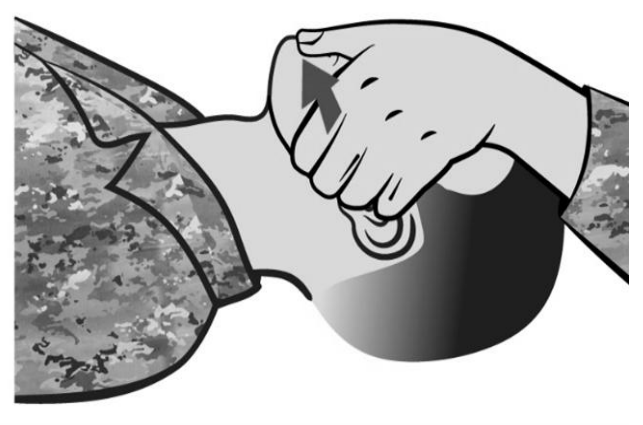
Fig. 5-6 from U.S. Army ATP 4-02.11, Casualty Response, Tactical Combat Casualty Care, and First Aid (23 March 2026), p. 64. Public domain; cropped. Not endorsed by the U.S. Army or Department of Defense.
What not to do
- Don't move someone who may have a spine injury unless they're in danger where they are or need to be turned to breathe.
- Don't bend, raise or twist the head or neck (ATP 4-02.11).
- Don't let them get up after a fall or crash, even if they say they're fine. ATP 4-02.11 says to caution them not to move.
- Don't carry them. ATP 4-02.11 says manual carries are to be avoided for suspected neck or spine injuries unless there's an immediate life-threatening hazard.
- Don't try to move them alone if you must move them. ATP 4-02.11 says at least two people are needed to move the head and trunk together, and CERT says to use in-line stabilization and a backboard (a door or tabletop will do) if you must move someone.
The Army manual also describes improvised neck supports, head blocks made from filled boots, and four-person litter lifts. Those are written for soldiers and their evacuation chain, and the civilian sources read for this page don't teach them, so this page leaves them out. If help may be badly delayed, as in a large disaster, the CERT course teaches moving survivors safely as a team.
Recovering from a concussion
The CDC's advice for adults, and its discharge instructions for children, follow the same pattern:
| Stage | What the CDC advises |
|---|---|
| First few days | Rest, because symptoms are worst then. Time off work or school is usually short, no more than 1 to 2 days. Relaxing activities, such as reading or a short walk, are fine. |
| As symptoms ease | Return gradually to regular, non-strenuous activities, even with some mild symptoms. If an activity makes symptoms worse, cut back on it. |
| Symptoms nearly gone | Return to most regular activities. |
| Recovered | You can do all your usual activities without symptoms. |
Sleep. The CDC's handout for parents encourages a good night's sleep and naps as needed early on, then a regular sleep schedule: no screens or loud music before bed, a dark room and fixed bed and wake times.
Avoid another blow. The CDC says to avoid activities, such as sports, that could cause another head injury during recovery. Its handout warns that a repeat concussion before the brain has healed can increase the chance of long-term problems, and in teens, though rarely, can cause a severe or even fatal brain injury.
Sports. CDC HEADS UP says: remove an athlete from play right away if a concussion is suspected, keep them out for the rest of that day and until a health care provider clears them, and don't judge the severity yourself. Returning to sports is a step-by-step process that the CDC says can take a week or more.
Driving, work and medicines. The CDC says to ask the provider for written instructions on when it's safe to return to work, school and driving, and which medications are safe during recovery.
When to go back to the doctor. Most people feel better within a couple of weeks. The CDC says to contact a provider if symptoms haven't improved after about 2 to 3 weeks, or get worse after you return to normal activities. Recovery may be slower in older adults, young children and people who have had a concussion before.
When you see the provider, CDC HEADS UP lists the details worth passing on: how the injury happened and how hard the hit was, any loss of consciousness and for how long, any memory loss or seizures right after, how many concussions they've had before, and any medicines they take.
Honest limits
First aid can't treat a brain or spinal cord injury. What it can do is avoid making one worse, keep the person breathing, and get them to people with scanners and surgeons. Every person on this page with a danger sign, a suspected spine injury or a head wound needs a doctor, and the CDC's handout for parents asks for a follow-up visit with the doctor after a child's concussion.
Where to get trained
The skills here, holding the head in line, the jaw-thrust, rolling someone as a unit and moving a person on a board, are learned with hands, in a group, with an instructor watching.
- FEMA's CERT program teaches head-to-toe assessment, recognizing head and spine injuries, stabilizing the head and moving survivors as a team: ready.gov/cert
- American Red Cross first aid classes: redcross.org/take-a-class
- American Heart Association first aid and CPR classes: cpr.heart.org/en/find-a-course
Then read the first five minutes for checking someone who has fallen, and fractures for injuries to the limbs.
Sources
- CDC — Symptoms of Mild TBI and Concussion (September 15, 2025)
- CDC — What to Do After a Mild TBI or Concussion (September 15, 2025)
- CDC — Facts About TBI (August 4, 2025)
- CDC HEADS UP — Concussion Basics (January 7, 2025)
- CDC HEADS UP — Signs and Symptoms of Concussion (September 15, 2025)
- CDC HEADS UP — Responding to a Sports-related Concussion (September 15, 2025)
- CDC — Caring for Your Child's Concussion (discharge instructions)
- NICHD (NIH) — What are the signs and symptoms of spinal cord injury? (reviewed January 25, 2022)
- NICHD (NIH) — What causes spinal cord injury? (reviewed January 25, 2022)
- MedlinePlus (NIH) — Spinal Cord Injuries (updated January 20, 2026)
- U.S. Army — ATP 4-02.11, Casualty Response, Tactical Combat Casualty Care, and First Aid (23 March 2026), chapters 2, 5, 11 and 13
- FEMA — CERT Basic Training Participant Manual (2019), units 3 and 4