Chapter 2 · Water
Rain catchment: collecting, storing and treating rainwater
A roof turns every inch of rain into more than half a gallon per square foot, which makes rain the most generous water source most households have. It is not clean water, though, and some states limit how much you may keep. Here is how to collect it, store it, make it safe and stay within the law.
Read first: Purify water
Stored water runs out. A roof doesn't. In a long emergency, or anywhere the tap is unreliable, rain is the one source that refills itself on schedule, and a modest roof catches far more of it than most people expect.
The trade-off is quality. Rain picks up whatever is in the air and whatever is on your roof, and a barrel left open breeds mosquitoes. CDC treats collected rainwater as water that may carry germs and chemicals even when it looks clean. So rain catchment is three jobs: catching it cleanly, storing it so it doesn't spoil, and treating it before anyone drinks it. A fourth, checking the law, comes first.
Check your state's rules first
There is no single national rule. The Department of Energy's Federal Energy Management Program notes that some states restrict rainwater harvesting and that permits may be required, and its online Alternative Water Supply Tool has a state-by-state layer of the rules. The National Conference of State Legislatures says most states and territories let residents collect rain freely, while Colorado and 18 other states have set limits on who may collect it and how it may be used.
Why would anyone limit rain? In some Western states, water rights are old and specific. NCSL explains that in Colorado, water-rights law had for more than a century assigned rainwater runoff to farmers and other holders downstream, so a homeowner's barrel was in principle taking their water. Colorado loosened its rules in 2009 to allow limited individual collection (NCSL), and a 2016 law, House Bill 16-1005, is what now lets most households use rain barrels (CSU Extension).
Three examples show how different the rules can be:
| State | What a household may do | Source |
|---|---|---|
| Colorado | Up to two rain barrels, 110 gallons combined, at single-family homes and buildings of four or fewer units. Water must come from rooftop downspouts. Barrels need a tight lid or mesh cover. Outdoor watering of lawns, plants and gardens on the same property only: no drinking, no indoor use; CSU adds that barrel water isn't for watering livestock. No permit needed. It creates no water right | CSU Extension (2025) |
| Utah | No registration if you use no more than two covered containers of 100 gallons or less each. Above that, register with the Division of Water Rights (free), up to 2,500 gallons per parcel. Water must be used on the parcel where it is caught | Utah Division of Water Rights |
| Texas | Encourages it: the Texas manual says Senate Bill 2 of the 77th Texas Legislature exempts rainwater harvesting equipment from sales tax and lets local governments exempt systems from property tax | TWDB (2005) |
These are examples, not a survey. Rules change, so check your own state's water-rights or environmental agency before you buy tanks. CDC gives the same advice and points to the DOE map.
How much water a roof catches
The Texas Water Development Board's manual gives the figure every rainwater calculation starts from: in theory, about 0.62 gallons per square foot of collection surface per inch of rain. In practice some is lost to the first flush, evaporation, splash-out and overflowing gutters in heavy rain, so the manual's worked example assumes 85% collection efficiency.
The 1925 USDA bulletin Farmstead Water Supply gives the same rule in older form: measure the roof's ground plan (its footprint, not the sloped surface), multiply by the inches of rain, and divide by 1.6 to get gallons. Dividing by 1.6 is the same as multiplying by 0.625, so the two sources agree almost exactly. Both use the footprint: a steep roof doesn't catch more rain than a flat one covering the same ground.
The formula: footprint (sq ft) × rain (inches) × 0.62 × 0.85 = gallons you can expect.
| Roof footprint | 1 inch of rain, in theory | 1 inch at 85% efficiency |
|---|---|---|
| 500 sq ft | 310 gal | 264 gal |
| 1,000 sq ft | 620 gal | 527 gal |
| 1,500 sq ft | 930 gal | 791 gal |
| 2,000 sq ft | 1,240 gal | 1,054 gal |
Calculated from the TWDB figures. Put another way, a tenth of an inch of rain on a 1,000-square-foot roof is about 62 gallons in theory, more than a 55-gallon barrel holds. Catching water is rarely the limit; storing it is.
The 1925 bulletin adds a warning that still holds: plan large, because most places have droughts or dry years when rain falls to a half or a third of normal, and many small rains can't be used because the roof is dirty.
Roofs and gutters: what the water touches
CDC lists what rainwater can pick up: dust, smoke and particles from the air before it lands, then asbestos, lead or copper from roofing, gutters, pipes and storage materials, and dirt and bird droppings washed off the roof, especially after several dry days.
The Texas manual compares roofs for drinking-water systems:
| Roof | For drinking water? | Why (TWDB) |
|---|---|---|
| Metal (such as Galvalume, aluminum-zinc coated steel) | Recommended | Smooth, sheds water efficiently; plain galvanized or metal with epoxy or latex paint recommended |
| Slate | Suitable | Smooth; only if no toxic sealant is used |
| Clay or concrete tile | Suitable | Porous; up to 10% loss; sealants or paint may leach |
| Composite or asphalt shingle | Not for drinking | Leaching of toxins; irrigation only |
| Wood shingle, tar and gravel | Usually irrigation only | Leaching of compounds |
Gutters matter too. The manual says lead solder, found in some older metal gutters, can't be used on a drinking-water system, because rain is slightly acidic and can dissolve the lead. Common gutter materials are PVC, vinyl, seamless aluminum and galvanized steel.
Screens come before everything else. Leaf guards along the gutter or a screen in the downspout keep out leaves and twigs, but the manual warns they must be cleaned regularly: a clogged screen stops water reaching the tank, and rotting debris harbors bacteria.
The first flush
The first rain off a roof washes down what has collected since the last storm: the Texas manual lists dust, pollen, leaves, insect bodies, bird and rodent feces and airborne residues. A first-flush diverter sends that dirtiest water somewhere else before the rest goes to storage. The 1925 bulletin lists the same idea as one of the vital features of a drinking-water cistern: keep out the first part of each rainfall until the roof has been rinsed.
How much to divert? Nobody knows exactly, and the sources say so:
- The Texas manual's rule of thumb: divert at least 10 gallons per 1,000 square feet of roof.
- The same manual also gives a recommended range of 1 to 2 gallons per 100 square feet, which is 10 to 20 gallons per 1,000.
- It reports an Australian vendor's study recommending 13 to 49 gallons per 1,000 square feet.
The manual explains the spread: it depends on how many dry days have passed, the roof's slope and smoothness, overhanging trees, the season and how hard it's raining. After a long dry spell or near trees, divert more.
The simplest diverter is a standpipe: a capped vertical pipe on the downspout that fills first, after which water flows on to the tank. A pinhole or a slightly open valve at the bottom lets it drain slowly between storms, and it should be emptied and cleaned after each rain (TWDB). To size it, the manual gives the length of pipe that holds a gallon:
| Pipe diameter | Length per gallon |
|---|---|
| 3 inch | 33 inches |
| 4 inch | 18 inches |
| 6 inch | a little over 8 inches |
So 10 gallons takes about 7 feet of 6-inch pipe, or 15 feet of 4-inch pipe. That is why larger roofs often use a diverter on each downspout.
Storage: barrels and cisterns
What every tank needs
The Texas manual's basics for storage tanks:
- Opaque, bought that way or painted, because light grows algae.
- Covered, with vents screened against mosquitoes.
- Never used to store toxic materials if the water is for drinking.
- Accessible for cleaning.
- On a stable, level pad. Water weighs just over 8 pounds a gallon, so a 1,500-gallon tank weighs about 12,400 pounds, and a leaning tank can collapse.
- Overflow routed away from the tank pad, foundations and septic drainfields.
CDC adds two rules about mosquitoes and mixing. Put a screen where water enters, or empty a rain barrel at least every 10 days. And don't add rainwater to treated water such as bottled or tap water, because it can make the treated water less safe.
Keep rainwater out of the house plumbing
CDC says to make sure rainwater cannot flow into pipes that carry drinking water, and to ask your health department for guidance. The Texas manual explains why: a system tied to the public supply needs a backflow preventer so rainwater can't be drawn into the utility's mains when pressure drops.
Rain barrels
The Texas manual describes the rain barrel as the simplest installation: a 50- to 75-gallon drum, often used to water plant beds, with a screen at the inlet against mosquitoes. A food-grade plastic barrel that held bulk liquids can be fitted with a spigot. Several barrels can be linked through overflow ports so one fills the next.
Cisterns
A cistern is simply a bigger tank, above or below ground. The 1925 bulletin's list of what makes a cistern fit for drinking water has aged well (see Fig. 2-2):
- Watertight top, sides and bottom, with inlet and overflow pipes closely screened.
- A way to keep out the first part of each rain until the roof is rinsed.
- A good filter (the bulletin specifies clean sand and charcoal).
- An overflow that draws from the bottom, where impurities settle.
- Regular, thorough cleaning of the cistern and filter.
- No connection between the overflow and a sewer or a drain that could carry foul water back.
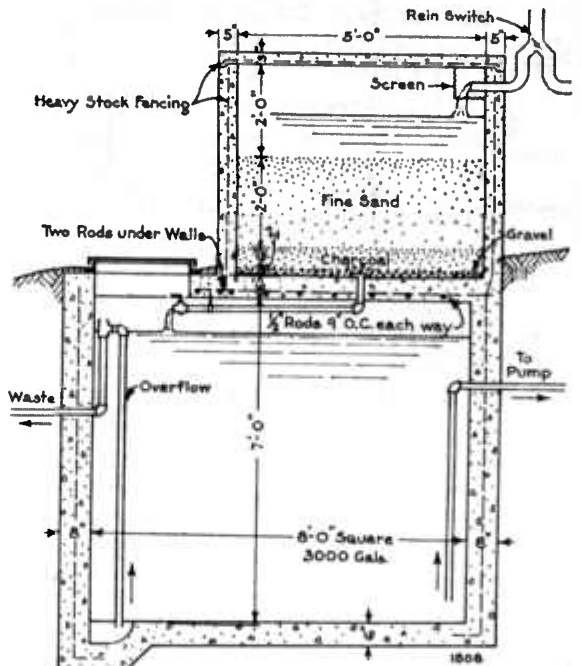
Fig. 9 from USDA Farmers' Bulletin 1448, Farmstead Water Supply (1925), p. 11. Public domain; cropped.
The bulletin also gives a quick capacity rule for a square or rectangular tank: inside length × width × height in feet, times 7½, gives gallons. A tank 6 × 4 × 4 feet holds about 720 gallons. The Texas manual says to size a cistern to see the household through the longest expected stretch without rain.
The 1925 bulletin's warning about a cistern's weaknesses still describes the risks: dust, soot and bird droppings from the roof, tastes from the tank walls, neglected cleaning, tree roots and, most serious, foul seepage from something nearby.
Making rainwater safe to drink
CDC's position is that rainwater can carry germs and chemicals and should be treated before drinking, with a method that deals with what is actually in it. For everyday use, CDC suggests limiting rainwater to things you won't swallow, such as watering non-food plants and washing non-food items, and using tap or bottled water for drinking, cooking, brushing teeth, rinsing produce and watering edible plants. If you drink, cook or bathe with rainwater, CDC says to test it regularly for germs and chemicals, and to ask your health department which ones to test for.
In an emergency, CDC and FEMA both list rainwater among the outdoor sources that can be made safe by treatment. The steps:
- Let it settle and clear it. If it's cloudy, settle it and pour it through a clean cloth or coffee filter (EPA, CDC; see Fig. 2-3). The 1925 bulletin's caution about any filter applies: it removes dirt and makes water safer, but it is never a guarantee. Filtering salt water still leaves salt water.
- Filter for parasites if you have a portable filter. Chlorine doesn't kill Giardia or Cryptosporidium; the Texas manual says an absolute 1-micron filter, certified by NSF, is needed to remove them. See water filters compared.
- Disinfect. FEMA calls boiling the safest method; chlorine doesn't kill Giardia or Cryptosporidium (TWDB), which is why the filter step matters if you use bleach. The doses, times and altitude rule are in how to purify water.
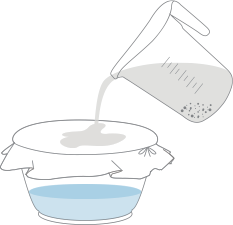
From U.S. Environmental Protection Agency, Emergency Disinfection of Drinking Water (EPA 816-F-15-003, 2017), p. 2. Public domain; cropped.
Chlorinating a whole tank. The Texas manual says chlorine must reach 1 part per million to disinfect, and that for laundry bleach at 6% that takes 2 fluid ounces (1/4 cup) per 1,000 gallons. It adds three drawbacks: household bleach isn't labeled by FDA for treating water, chlorine combines with decaying organic matter to form by-products called trihalomethanes, and chlorine still doesn't kill Giardia or Cryptosporidium. The manual itself presents tank chlorination as mostly of historical interest. For drinking, treat the water you draw, by the batch, as in the steps above.
Rainwater that can't be fixed
- Fuel, oil or toxic chemicals in a cistern: CDC says treatment can't make it safe; drain it completely.
- Asphalt-shingle roofs leach compounds; the Texas manual says that water is for irrigation only.
- Radioactive fallout. Kearny's 1979 civil-defense manual warns that water collected from fallout-contaminated roofs carries more fallout than runoff from the ground. Follow official instructions in a radiation emergency and use stored water.
Before and after a storm
CDC's cistern guidance for disasters:
Before:
- Fill the cistern to capacity. The extra water adds to your supply and helps weigh down a rooftop tank in high wind.
- Close or divert the catchment so floodwater and storm runoff can't get in.
- Keep stored emergency water anyway (at least 1 gallon per person per day for 3 days, two weeks if you can) and a bottle of unscented 5–9% bleach.
After:
- If a cistern of untreated rainwater with open connections (gutters, overflows) took in storm debris or floodwater, don't use it; ask the health department. CDC says disinfecting that water is unreliable, because the right chlorine dose is hard to judge and the open connections let contamination back in. Contaminated water can still be used to flush toilets.
- Cleaning a catchment cistern, if the health department says to: clear debris from the roof and gutters, empty the cistern completely, scrub the inside with a stiff brush and a solution of 1 cup of 5–9% bleach in 10 gallons of water if it is safe to do so, rinse, drain and refill with clean water.
For the storm itself, see hurricanes and floods.
Rain catchment system
- State rules checked: barrel limits, registration, permitted uses
- Roof suitable for the use (no asphalt shingles for drinking water), gutters free of lead solder
- Leaf guards or downspout screens, cleaned after storms
- First-flush diverter sized at 10 gallons or more per 1,000 sq ft of roof, emptied after each rain
- Opaque, covered tanks that never held chemicals, vents and inlets screened
- Barrels emptied at least every 10 days if not screened (CDC)
- Tanks on a level pad that can take 8+ pounds per gallon
- Overflow routed away from foundations and septic drainfields
- No connection to the house's drinking-water pipes
- Labels: "Rainwater, not for drinking untreated"
- Treatment for drinking water on hand: filter, bleach, a pot for boiling
- Cistern cleaning supplies: stiff brush, bleach, eye protection
Where to go next
Rain is one source among several: start with how to store water and the water already in your house. For treatment, see how to purify water and water filters compared. If your house also has a private well, see wells and well shock.
Sources
- CDC — Collecting Rainwater and Your Health: An Overview
- CDC — Cistern Safety and Disasters: Before, During, and After
- CDC — How to Find Clean Water in an Emergency
- Texas Water Development Board — The Texas Manual on Rainwater Harvesting, 3rd ed. (2005)
- USDA — Farmers' Bulletin 1448, Farmstead Water Supply (1925)
- EPA — Emergency Disinfection of Drinking Water (EPA 816-F-15-003, 2017)
- FEMA — Food and Water in an Emergency (FEMA 477, 2004)
- Cresson H. Kearny — Nuclear War Survival Skills (ORNL-5037, 1979)
- U.S. Department of Energy, FEMP — Alternative Water Supply Tool
- NCSL — Map Monday: Is Catching Rainwater Legal in Your State? (updated September 8, 2025)
- Colorado State University Extension — Rainwater Collection in Colorado (2025)
- Utah Division of Water Rights — Rainwater Harvesting Registration