Chapter 10 · Kits & Bug-Out
The get-home bag: getting back from work or school when roads and transit fail
Most of us spend the working day miles from our supplies. A get-home bag is the small kit that covers the gap: a day at your desk if you have to stay, or a long walk if you have to go.
Read first: The 72-hour kit
The home kit only helps if you are home. On a weekday, many people are at work, at school or somewhere in between when an earthquake, a storm or a big outage hits. Trains stop while the tracks are inspected. Roads jam or close. Phones are busy. The question then is not "what do we have in the closet?" but "how do I get back to the closet?"
A get-home bag answers that question. It is a small bag kept at work, in a school locker or in the car, packed for one person and one job: to keep you fed, watered, lit and on your feet for a day, either sheltering where you are or walking home. It is smaller than the bug-out bag, which is built to leave home for several days, and it is not the car kit, which is built around the vehicle. The bug-out bag guide has a table comparing all three.
Why this bag exists
Ready.gov asks people to be ready to shelter at work for at least 24 hours, and to keep a grab-and-go work kit with food, water and medicines, plus comfortable walking shoes. That one line covers both halves of the problem: you may have to stay put, and you may have to walk.
The walking half is not theoretical. The Wellington Region Emergency Management Office (WREMO) in New Zealand plans on a large earthquake damaging roads and rail for a week or longer. Its modeling suggests that if the quake struck during working hours, up to 80,000 commuters could end up walking home. That planning grew out of experience: in 2013 a magnitude 6.6 earthquake near Seddon hit at 2:30 on a Friday afternoon, and many Wellington commuters could not get home by their usual transport. WREMO reports that many spent the night with friends in the city or walked, and that some finally put to use the emergency bags and spare walking shoes they had stowed at work and forgotten about.
WREMO now runs an annual "Long Walk Home" so people can practice. The 2024 walk was 30 kilometers (about 19 miles), from Wellington's stadium to Porirua, with checkpoints where walkers close to home could stop.
Stay or go? The official advice differs
Before packing, decide what the bag is for. Official guidance points in different directions, and both have good reasons.
| Agency | What it tells people at work | Its reason |
|---|---|---|
| Ready.gov (FEMA) | Be ready to shelter at work for at least 24 hours; keep food, water, medicines and walking shoes there | You may not be able to get home, or it may not be safe to try |
| Tokyo Metropolitan Government | Employees should wait inside their workplace; companies should stock three days of water and food for staff | Millions trying to walk home at once crowd streets and get in the way of rescue; in a survey after the 2011 earthquake, about half of people said they would set off home on foot immediately if a quake struck under the capital |
| WREMO, Wellington | Prepare to walk home, and practice the route | Roads and rail may be out for a week or longer, so waiting does not bring transport back |
Tokyo's numbers explain its caution. Its 2006 damage estimate put roughly 4.48 million people stranded in the capital after a magnitude 7.3 quake under northern Tokyo Bay, and after the 2011 earthquake an estimated 3.52 million were stranded. Tokyo's answer is to keep people where they are and set up support stations with water, toilets and information along the walking routes for those who do head home.
The practical takeaway: staying put for the first day is often the safer choice, especially in the first hours after an earthquake or while a storm is still passing. Pack the bag so that you can do either. It needs enough to wait through a day and night at work, and enough to walk home if waiting stops making sense. Follow what local officials and your employer or school tell you on the day.
Plan the route before you need it
Ready.gov's Commuter Emergency Plan is a one-page form for exactly this. It asks you to write down, in advance:
- Your normal route to and from work or school, and alternative routes (the form has space for two).
- Each public transit line you use, with its stops and fares.
- Other transport options: local taxi companies, commuter rail, bus lines, with their phone numbers.
- Links to local traffic and transit information. The form points to the Department of Transportation's 511 traveler information program, so you can check whether your area takes part.
It suggests keeping the plan in your wallet or another place you can reach in a disaster. Put a copy in the bag as well.
Two additions are worth making on the same sheet:
- A walking route. Transit routes and driving routes don't always make good walking routes. Trace one on a paper map that avoids bridges, underpasses and low-lying roads that flood, and mark places along the way where you could rest, find water, or wait with someone you know.
- Where you'll meet, and who picks up the children. Ready.gov's planning page asks every household to set a familiar meeting place and a way to reconnect if separated. If you might be stuck at work, decide now who collects children from school and who checks on an older relative. That belongs in your household plan, and the household radio plan covers how to keep in touch when phones don't work.
How long will the walk take?
The Army's foot-march manual, ATP 3-21.18, gives an average marching rate in daylight on roads of 4 kilometers an hour, about 2.5 miles an hour, and 2.4 kilometers an hour (about 1.5 miles an hour) cross-country. Those are soldiers' figures, for people who train for marching. Expect to be slower in work shoes, in a crowd, in the dark or with a child.
The same manual sets a rest pattern: a 15-minute halt after the first 45 minutes to adjust loads, then about 10 minutes of rest for every 50 minutes of walking. The table below is the Almanac's own arithmetic, not a table from the manual: it applies the soldiers' march rates and the 10-minutes-in-60 rest pattern to common distances, and leaves out the longer first halt. Treat it as a planning floor for a fit adult, not a promise.
| Distance home | Walking time at 2.5 mph | With rest halts (10 minutes per 50) | Cross-country at 1.5 mph, with halts |
|---|---|---|---|
| 3 miles | 1 hr 12 min | About 1 hr 25 min | About 2 hr 25 min |
| 5 miles | 2 hr | About 2 hr 25 min | About 4 hr |
| 10 miles | 4 hr | About 4 hr 50 min | About 8 hr |
| 15 miles | 6 hr | About 7 hr 10 min | About 12 hr |
| 20 miles | 8 hr | About 9 hr 35 min | About 16 hr |
| 30 miles | 12 hr | About 14 hr 25 min | About 24 hr |
If your commute is more than about 10 miles, walking home means at least half a day on foot even at a soldier's pace, and beyond about 20 miles it likely means a night on the way. That is a strong reason to have somewhere to wait, a friend's place partway or a plan to stay at work, rather than only a plan to walk.
The manual also notes that terrain changes the effort: walking in sand or swamp roughly doubles the energy cost compared with a paved road, and walking in snow without snowshoes can raise it four to six times.
What goes in the bag
The test for each item is whether it helps you either wait a day where you are or walk home. Ready.gov names the core of the work kit: food, water, medicines and comfortable walking shoes. The rest comes from Ready.gov's general kit list, scaled down to one person and one day, plus the Almanac's suggestions for a walk, marked below.
Shoes and socks first
The single item that most decides whether you get home is on your feet. Office shoes, heels and work boots that pinch are fine at a desk and miserable after three miles. Keep broken-in walking shoes in the bag or under the desk.
The Army manual's foot-care appendix explains why socks matter as much as shoes. Blisters and abrasions are the commonest injury from carrying a load on foot, and they come from friction, pressure and moisture. Its advice for preventing them:
- Wear clean, dry, well-fitting socks. A thin nylon, polyester or polypropylene liner under a thicker outer sock reduces blisters; acrylic socks help by moving sweat away from the skin.
- Change wet or damp socks as soon as you can. Pack a spare pair.
- Break in new footwear by alternating it with an old pair, and tape known hot spots before a long walk.
- Act on hot spots. A hot spot is a warm, burning, red patch that comes before a blister. Cover it with moleskin or tape at the first rest stop instead of walking on.
- At halts, loosen the laces a little over the arch if your feet swell.
The manual also describes how soldiers drain blisters. This guide stops at prevention; for a blister that breaks or a foot wound that looks infected, see wounds.
Water and food
Carry at least one full bottle and something to make more safe. Ready.gov's kit standard is about a gallon per person per day for drinking and sanitation, which is more than one person will want to carry on foot; a liter or two plus a small filter or purification tablets is the usual compromise, as in the bug-out bag. How to purify water has the methods and doses. Add food that needs no cooking, such as bars, nuts and dried fruit, enough for a day.
Light, signal and information
A flashlight or headlamp with spare batteries, because outages and night walks go together. A whistle, which Ready.gov lists for signaling for help. A paper map with your walking route marked, since your phone may be dead or without signal. A phone charging cable and a charged backup battery. A small battery or crank radio, so you can hear what officials are saying.
Health
Your prescription medications for at least a day, with a written list of what you take. A few adhesive bandages, moleskin and pain reliever; the first aid kit guide has the full home list. Hand sanitizer: CDC says to use one with at least 60% alcohol when soap and water aren't available, and notes it works less well on hands that are visibly dirty or greasy. A dust mask, which Ready.gov lists to help filter contaminated air, matters after an earthquake or a building collapse, when dust fills the air.
Clothing for the weather
A rain layer, a warm layer and a hat, chosen for the worst season you commute in. In winter, NWS advises loose, lightweight, warm layers, taking one off before you start to sweat, because sweat leads to chills. In summer, a hat and more water. See hypothermia and frostbite and heat illness for the warning signs to watch for in yourself and others.
Money and papers
Small bills, because card readers and ATMs may be down, and a copy of the Commuter Emergency Plan and your contact list on paper.
Packing it so you can carry it
Keep it light. This bag is meant for a single day, so it should be well under a bug-out bag in weight. Wear it on a lunchtime walk once and remove whatever you never touched.
ATP 3-21.18 gives two load-carrying findings that apply to any backpack:
- Heavy items high and close to your back. The manual says packing the heavier items higher and closer to the body can cut the energy cost of walking by as much as 25 percent compared with the same items low and away from the body (Fig. 10-1). Water bottles and food go against the back panel, not in an outside pocket.
- Use the hip belt. With a properly fitting hip belt, pressure on the shoulders drops considerably compared with the same pack without one.
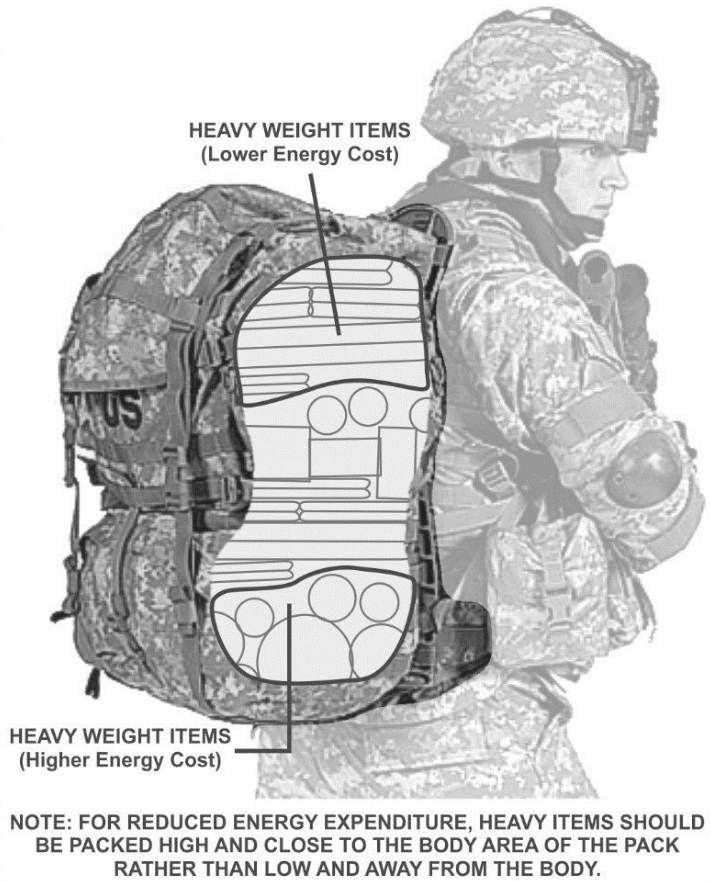
Fig. C-2 from U.S. Army ATP 3-21.18, Foot Marches (April 2017), p. C-3. Public domain; cropped. Not endorsed by the U.S. Army or Department of Defense.
A plain daypack with a waist strap is enough. A bright or reflective item on the outside helps drivers see you if you end up walking at dusk.
Get-home bag (one per person, kept at work, school or in the car)
- Broken-in walking shoes, if you don't wear them every day
- Two pairs of socks, with thin liner socks
- Moleskin or tape for hot spots, a few adhesive bandages
- One to two liters of water in bottles
- A small water filter or purification tablets
- Food for a day that needs no cooking
- Prescription medications for at least a day, and a written list
- Pain reliever
- Hand sanitizer with at least 60% alcohol
- Dust mask
- Flashlight or headlamp, with spare batteries
- Whistle
- Paper map with your walking route and alternates marked
- Printed Commuter Emergency Plan and contact list
- Phone charging cable and a charged backup battery
- Small battery or crank radio
- Rain layer, warm layer and hat for the season
- Cash in small bills
- Reflective band or vest for walking near traffic (suggested)
On the walk
- Tell someone you're leaving, your route and when you expect to arrive. Phone alerts covers texting versus calling when networks are busy.
- Stay off flooded roads and paths. The National Weather Service says six inches of fast-moving floodwater can knock an adult off their feet, and that it is never safe to walk or drive into floodwater; the road underneath may be gone.
- Keep clear of power lines, overpasses, bridges and signs after an earthquake or storm. Ready.gov's car guidance lists them as hazards to avoid when an emergency may have weakened the road, and the same caution applies on foot.
- Rest on a schedule. Use the Army's pattern of a short halt every 50 minutes, drink at each halt, and check your feet at the first one.
- In a winter storm, don't set out on foot. NWS warns stranded drivers that anyone who leaves shelter in wind-driven snow and cold can become disoriented quickly, and the same holds for a walker. Shelter where you are, or in your car if you are in one (see the car kit).
- If you're on the way and it's getting dark with miles to go, stopping at a friend's house, a public shelter or your workplace is a better plan than walking through the night.
Keeping it ready
- Check it twice a year (the Almanac's suggestion), for example when the clocks change. Replace food and water by their dates, swap seasonal clothing, and recharge the battery pack.
- Update the medications whenever prescriptions change.
- Re-walk the route after you move house or change jobs. Ready.gov's form is quick to redo.
- Know your workplace plan. Ask whether your employer keeps water and food for staff and where the shelter area is; Tokyo's survey found only about 42% of companies there held more than three days of water, so don't assume yours does.
Where to go next
If you drive to work, the car kit covers the vehicle side, including what to do if you are stuck on the road. The 72-hour kit is what waits at home, and the household plan is where you record who goes where. When toilets at work or at home stop working, see emergency toilets.
Sources
- Ready.gov — Build a Kit
- Ready.gov — Commuter Emergency Plan (PDF)
- Ready.gov — Make a Plan
- Ready.gov — Car Safety
- U.S. Army ATP 3-21.18 — Foot Marches (2017)
- CDC — Guidelines for Personal Hygiene During an Emergency
- NWS — Flood safety: driving and walking in floodwater
- NWS — Winter Safety: During a Storm
- Wellington Region Emergency Management Office (New Zealand) — Long Walk Home 2024
- Wellington Region Emergency Management Office (New Zealand) — November newsletter (the 2013 Seddon earthquake)
- Tokyo Metropolitan Government — Basic Concepts for Measures for Stranded Persons (summary, 2017)