Chapter 11 · Navigation & Skills
Shutting off gas, water and power
Every responsible adult in the house should know where the gas, water and power shutoffs are and how to close them. Just as important is knowing when not to, and the one shutoff you never undo yourself.
Read first: Household plan
Three things come into every house through a pipe or a wire: gas, water and electricity. In a disaster each can turn from a convenience into a hazard. Gas leaks and explodes, broken pipes flood the house or let dirty water back into the supply, and damaged wiring shocks people and starts fires. Each one has a shutoff, and FEMA's CERT program asks that the responsible people in a household know where every shutoff is and how and when to use it.
The "when" matters as much as the "how." A gas shutoff in particular is easy to close and slow to undo, because after you close it at the meter, only the gas utility or a qualified technician can turn it back on. Close it when you need to and you've prevented a fire. Close it when you didn't need to and you may go days without heat or hot water waiting for a crew.
The three shutoffs at a glance
| Natural gas | Water | Electricity | |
|---|---|---|---|
| Shut it off when | You smell gas, hear it escaping, see a broken gas line, or suspect a leak (SoCalGas, PG&E, San Mateo County) | A pipe has burst or there is a leak inside; cracked lines may contaminate the supply (San Mateo County, ReadyNC) | Sparks, arcing or a burning smell from wiring or devices; hot or blackened switches and outlets; fire; a serious water leak; standing water or downed lines (San Mateo County, CDC) |
| Where | At the meter, on the pipe coming out of the ground, usually 6 to 8 inches up (SoCalGas) | On the main line where it enters the house: usually the basement or garage (San Mateo County) | The main breaker or main switch in the service panel, often in the garage or where the lines enter (San Mateo County) |
| Tool | A 12-inch or larger adjustable wrench (SoCalGas); 12 to 15 inches (PG&E); non-sparking (CERT) | Usually by hand; the street valve in the curb box needs a special tool and should be left alone (ReadyNC) | None |
| How | A quarter turn until the tab is crosswise to the pipe (SoCalGas, PG&E) | Turn the wheel clockwise (San Mateo County) | Switch off the individual circuits, then the main (CERT, ReadyNC) |
| Who turns it back on | The gas utility or a qualified professional, never you | You, when officials say the water is safe | You or an electrician; an electrician first if anything got wet or was damaged |
Natural gas
Why gas is the dangerous one
CERT's manual names two hazards. Natural gas is flammable: a leak can ignite from a spark. And it is an asphyxiant: it displaces the oxygen you breathe. It is lighter than air, and CERT notes you will likely not feel it. PG&E describes its smell as rotten eggs but warns not to rely on smell alone.
PG&E's signs of a leak:
- Smell: rotten eggs.
- Sound: hissing, whistling or roaring from an appliance or from underground.
- Sight: dirt spraying into the air, steady bubbling in a pond or creek, or dead plants in an otherwise damp patch.
CERT's manual suggests natural gas detectors on every level, near the furnace, water heater, dryer and range, tested monthly like smoke alarms.
If you smell gas
Getting people out comes before the valve.
- Get everyone out and move upwind (PG&E). ReadyNC says to open a window on the way if you can.
- Don't make a spark. PG&E lists things to avoid until you are a safe distance away: phones, flashlights, light switches, matches and starting a car. San Mateo County adds candles, matches and running appliances.
- Shut the gas off at an outdoor meter if it is safe to reach. CERT says to turn off an outdoor meter if you smell gas, or if the meter's dials show gas flowing while every appliance is off.
- Call 911, then the gas company, from outside or a neighbor's house (PG&E, ReadyNC).
If the meter is inside the house, CERT says to shut it off only when local authorities tell you to. If you smell gas, get out and call 911. Don't go inside to reach the valve if gas may be in the air, and never go into the basement of a burning building to shut off any utility.
Gas can explode, and the valve is not worth your life
A gas leak is a reason to leave, not to investigate. Close an outdoor meter only if you can reach it safely, and only after people are out. Never go back into a house that smells of gas, and never go into a burning building to shut off a utility (CERT).
The sources differ on flashlights
PG&E lists flashlights among the things to avoid near a suspected leak, because any electrical device can make a spark. CERT's manual says to use a flashlight, not a candle, if you need light to find the valve. Both agree on the point that matters: no open flame. If you smell gas strongly, get out and let the utility come with its own equipment.
Turning it off at the meter
Find the valve now, in daylight, not during the emergency.
- Find the valve. Facing the meter, SoCalGas says the shutoff is on the pipe that comes up out of the ground to the meter, usually 6 to 8 inches above the ground. It has a flat tab that PG&E calls the tang.
- Fit the wrench to the tab. SoCalGas says a 12-inch or larger adjustable wrench; PG&E says 12 to 15 inches. CERT's manual specifies a non-sparking wrench.
- Give it a quarter turn (SoCalGas, PG&E). SoCalGas and San Mateo County say either direction closes it; CERT's manual says clockwise.
- Check it's closed: the tab now runs crosswise to the pipe. When it is open it runs along the pipe (SoCalGas, PG&E; see Fig. 11-7).
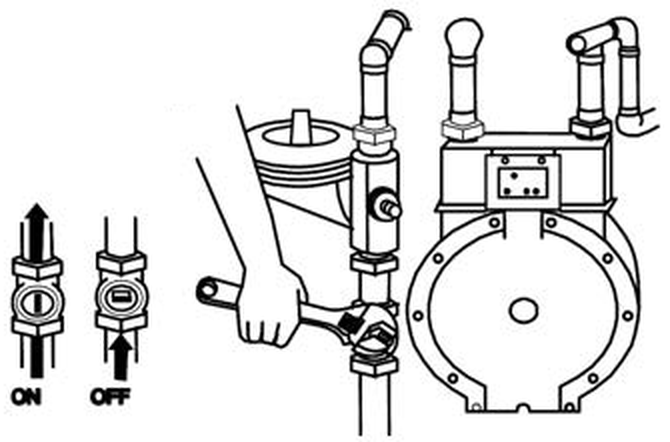
Image 6.7 from FEMA, CERT Basic Training Participant Manual (August 2019), p. 6-16. Public domain; cropped, a stray mark removed, and enlarged from a low-resolution original. Not endorsed by FEMA.
Keep the wrench with your emergency supplies or next to the valve, SoCalGas says, but not stored on the meter or the gas piping itself.
Apartments and other multi-unit buildings often have one shutoff for each unit plus a master valve where the pipe enters the ground (PG&E). CERT's manual notes the same pairing of a building shutoff and unit shutoffs, and asks you to weigh what closing each one will do. Ask your property manager now where yours are.
Appliance valves. Most gas appliances have their own shutoff on the line feeding them, closed with a quarter turn. PG&E says closing one may stop a leak at that appliance without cutting gas to the whole house.
Earthquake valves. CERT's manual notes that some homes have an automatic valve, installed by a plumber after the meter, that closes in an earthquake or other emergency. If it closes, only a qualified professional should reset it. If you don't know whether you have one, ask your gas company.
Who turns it back on
This is the part people get wrong.
- SoCalGas: don't turn the meter back on yourself. Call the company to turn it on and relight the pilots.
- PG&E: a PG&E representative or another qualified professional must inspect the system before service is restored and pilot lights are relit. There may be a delay.
- CERT: after gas is shut off, only a trained technician can restore it. Turning it back on wrongly or abruptly can cause leaks inside the house.
- ReadyNC: whatever the reason it was turned off, a trained person must turn it back on.
- San Mateo County: after a big event, waiting for the utility may take several days.
The reason is that turning gas back on is more than opening a valve. CERT's manual says doing it wrongly or abruptly can cause leaks inside the house, and the utilities inspect the system and relight every pilot before the gas flows again (SoCalGas, PG&E).
Relighting one pilot that went out on its own (when the meter was never closed) is different. PG&E says to follow the maker's instructions inside the burner compartment door, wait five minutes for gas to clear first, and call PG&E or a professional if it won't light.
Practice without closing it. ReadyNC suggests walking everyone through the steps but not actually turning the gas off, for exactly this reason.
Propane
San Mateo County notes that a propane system has its own shutoff valve on the storage tank, and says to call your propane dealer to restart the system if you have no experience relighting it.
When officials say to evacuate
The utilities say to close the gas only for a leak. CDC's flood guidance goes further: be ready to turn off the power when there is standing water or a fallen power line, and if you are evacuating and have time, turn off the gas, power and water before you leave. These don't really conflict; CDC is describing a flood about to come into the house, which is a reason in itself. Weigh it against the days without gas that may follow, and follow what your local officials tell you. Floods have their own page: floods.
Water
Why shut it off
Two reasons. A leak inside the house, such as a burst pipe, keeps going until the main is closed; San Mateo County says to shut the water off for one. And after a disaster ReadyNC says cracked lines may let contaminated water into the supply, so it is wise to keep the water off until the authorities say it is safe to drink.
Closing the main also protects the water already in your house. ReadyNC says shutting the main valve keeps gravity from draining the water heater and the toilet tanks, so that water stays available to you. How to get that water out and use it safely is in water at home.
Finding and using the valve
- Where: on the main water line where it enters the house, usually in the basement or garage, on a riser pipe, often with a red or yellow wheel (San Mateo County).
- How: turn the wheel clockwise to close it (San Mateo County).
- Test it now. ReadyNC says to check that it shuts the water off completely, and to replace a valve that is rusted open or only partly closes. Old valves seize when they are never used.
- Tag it so anyone can find it (ReadyNC). A tag on a cord tied around the pipe with a clove hitch stays where you put it.
- Leave the street valve alone. The house main is the valve you want, not the one in the concrete box at the curb; ReadyNC says that one is extremely difficult to turn and needs a special tool.
When the water is back on, don't drink it until officials say it is safe; purifying water covers what to do in the meantime.
If your water comes from a well, the pump runs on electricity, so shutting off the power also stops the water; wells covers wells in an emergency.
Electricity
When to shut it off
San Mateo County lists the reasons: sparks or arcing, a smell of burning insulation, switches or outlets that are hot or blackened, a fire, a serious water leak, or a total loss of power together with a burning smell. CDC adds standing water in the house, downed power lines, and leaving for an evacuation.
There is also a quieter reason: ReadyNC warns that electrical sparks can ignite leaking gas, and asks that every responsible person in the house know where and how to turn the power off.
How
CERT's manual and ReadyNC give the same order (see Fig. 11-8):
- Switch off the individual circuit breakers first (or unscrew the individual fuses).
- Then switch off the main breaker or pull the main switch.
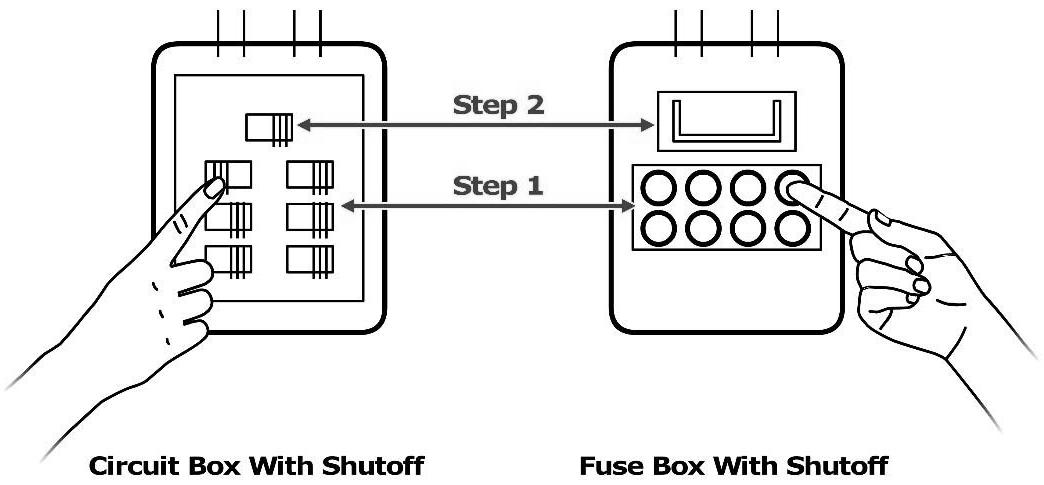
- Step 1: switch off the individual breakers, or pull out the individual fuses.
- Step 2: switch off the main breaker, or pull out the main fuse.
Image 6.6 from FEMA, CERT Basic Training Participant Manual (August 2019), p. 6-15. Public domain; cropped. Not endorsed by FEMA.
Turning it back on is the reverse: main first, then the individual breakers one at a time (CERT).
CERT's manual says to post these instructions next to the panel, and to call a licensed electrician or the utility after any electrical emergency or fire.
Water and electricity kill
- Don't walk into a flooded basement or stand in water to reach the panel. CERT's manual says water conducts electricity. If you can't reach the panel dry, call the utility or an electrician.
- Don't touch electrical equipment that is wet, or anything electrical while you're standing in water (Ready.gov). Turn off the power only if it is safe to do so.
- Treat every downed line as live. ReadyNC says assume it is energized, stay away and report it. Ready.gov warns that downed or underground lines can electrify floodwater.
- Don't connect a generator to the house wiring on your own. How it is done safely, and why it matters, is in transfer switches.
During an ordinary outage
ReadyNC's advice for an outage doesn't involve the panel at all: it suggests turning off and unplugging appliances and computers, and leaving one light on so you know when the power is back. The longer view of an outage is in power outages.
After a fire or disaster
Ready.gov says not to reconnect utilities yourself after a fire: the fire department should confirm they are safe or disconnected. The same caution applies after flood, earthquake or storm damage. For gas, the rule never changes: the utility or a qualified technician restores it. For electricity, have an electrician check anything that got wet before the power goes back on. The rest of fire recovery is in home fire safety.
Teach it, label it, practice it
CERT's manual asks for two things before a disaster: locate and label every shutoff, and teach everyone in the house who is old enough to handle it when and how to use each one. Write the locations into your household plan, and add the shutoffs to the walk-through when you practice the fire drill.
Utility shutoffs
- Gas meter valve found, tagged, and a 12-inch or larger (non-sparking) wrench kept beside it or with the kit
- Every gas appliance valve found
- Asked the gas company whether there is an automatic earthquake valve
- Water main valve found, tagged and tested: it closes fully
- Service panel found; main breaker labeled; shutoff order posted on the panel door
- A flashlight kept at the panel and one with the gas wrench
- Every responsible person has walked through all three, without actually closing the gas
- The gas company's emergency number saved in every phone
What not to do
- Don't shut off the gas "just in case." Close it for a leak or a broken line, or when officials tell you to. PG&E warns of a delay before it can restore service, and San Mateo County says it may take several days.
- Don't turn the gas back on yourself, even if the valve looks easy to open.
- Don't go inside a house that smells of gas, or into a burning building, to reach a shutoff.
- Don't stand in water to reach the electrical panel.
- Don't try to turn the street water valve at the curb; ReadyNC says it needs a special tool. The house main is the one you use.
- Don't wait for the emergency to find out the water valve is seized.
If someone is hurt by electricity or a fire, the first five minutes and burns cover what to do while help comes.
Sources
- FEMA — CERT Basic Training Participant Manual (2019), Unit 1, Disaster Preparedness and Unit 6, Fire Safety and Utility Controls
- SoCalGas — Shut off natural gas
- PG&E — Gas safety
- ReadyNC (North Carolina Emergency Management) — Utility Safety
- San Mateo County — How to shut off your utilities
- CDC — Preparing for Floods
- Ready.gov — Floods
- Ready.gov — Home Fires