Chapter 12 · Hazards
Long power outages: what fails, and when
An outage is not one problem but a series of deadlines: the refrigerator at four hours, refrigerated medicine at about a day, the freezer at one or two days, then heat, water and fuel. Here they are in order, with a link to the page that handles each.
Read first: Start here
Most outages are short. The U.S. Energy Information Administration reports that the average American electricity customer had 11 hours of interruptions in all of 2024, nearly twice the average of the decade before, and that 80% of those hours came from major events such as Hurricanes Beryl, Helene and Milton. Averages hide the long tail: customers in South Carolina averaged nearly 53 hours without power that year, and Milton alone left 3.4 million Florida customers in the dark.
So the outage worth planning for is not the evening with candles. It is the one that runs for days, or weeks after a big storm. FEMA's hurricane checklist says outages are commonplace in disasters and often last several days, and the National Hurricane Center's wind scale expects outages of several days to weeks after a Category 2 or 3 hurricane, and of weeks to possibly months after a Category 4 or 5.
This page is the timeline: what fails, in what order, and what to do at each step. Each fix has its own page in the Almanac, linked from here, so this page doesn't repeat them.
The deadlines at a glance
| Time without power | What runs out | What to do | The page that covers it |
|---|---|---|---|
| Minute one | Light; anything plugged in | Flashlights, not candles; unplug electronics | Below |
| First hours | Phone batteries; landline phones without battery backup; electric medical devices on battery | Conserve phone charge; switch devices to backup | Portable power stations |
| 4 hours | Refrigerator (door kept closed) | Discard perishable refrigerated food at 4 hours or more, or move it to a cooler with ice | Food safety in an outage |
| About 1 day | Refrigerated medicines (general rule); half-full freezer | Check each label; replace medicines as soon as possible | Medications |
| 2 days | Full freezer (door kept closed) | Check for ice crystals before refreezing or cooking | Food safety in an outage |
| Days | Comfortable indoor temperature; possibly tap water treatment; generator fuel | Cooling or warming center; boil or treat water; refuel safely | Staying warm, heat illness, water at home, fuel storage |
| Weeks | Stored food, water, fuel and cash; stores may not have restocked | Draw on the pantry; rotate | Three-month pantry, how to store water |
The times for food and medicine come from Ready.gov and CDC; the details and exceptions are below.
Minute one
When the lights go out, the first decisions are about fire and carbon monoxide, because those are what turn an inconvenience into a death.
- Light with batteries, not flames. CDC says to use battery-powered flashlights and lanterns rather than candles, gas lanterns or torches. If you do light a candle, CDC says to stay near it the whole time it burns. See fire safety.
- Unplug appliances and electronics. Ready.gov says this protects them from a surge when the power comes back.
- Keep the refrigerator and freezer shut. Every opening lets the cold out (Ready.gov).
- Check your carbon monoxide alarms. Ready.gov says to have battery-backup CO alarms on every level of the home.
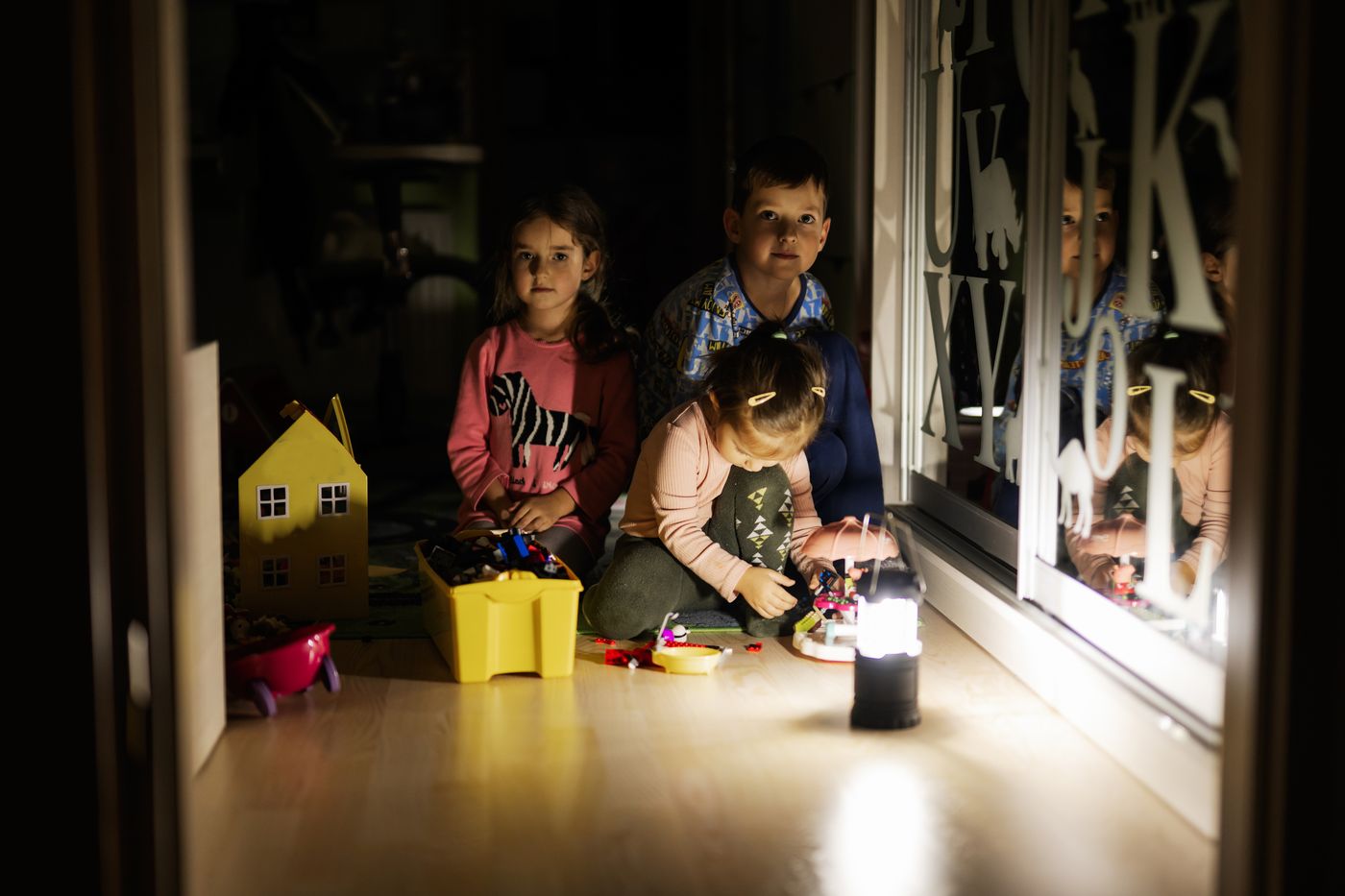
Photo: iStock.
Carbon monoxide kills in outages
CDC calls carbon monoxide an odorless, colorless gas that can cause sudden illness and death. The NWS lists it among the leading causes of death after storms that cut power.
- Never run a generator, pressure washer or any gasoline engine inside the home, basement or garage, or less than 20 feet from a window, door or vent (CDC).
- Never use a gas stove or oven to heat the home (CDC, Ready.gov).
- Never use a charcoal grill, hibachi, camping stove or lantern indoors, in a tent or in a camper (CDC).
- Never leave a car running in a garage or any enclosed or partly enclosed space (CDC).
- CDC lists the symptoms as headache, dizziness, weakness, nausea, vomiting, chest pain and confusion, and warns that people who are asleep or have been drinking can die before they notice anything. If you suspect it, CDC says to call 911 or Poison Control at 1-800-222-1222, or consult a health care professional right away.
The full rules are in generator safety, and safe ways to cook in cooking without power.
The first hours
Phones. A charged phone is your alert receiver, your flashlight in a pinch and your link to the outside. Ready.gov says to find out ahead of time whether your home phone will work in an outage and how long its battery backup lasts, and to plan batteries or a power bank for the things you rely on. Send texts rather than calling: Ready.gov notes that phone systems are often down or busy after a disaster. Portable power stations and solar cover recharging; phone alerts covers what to keep switched on.
Electric medical devices. Ready.gov says to talk to your medical provider, before any outage, about a plan for power-dependent devices and refrigerated medicines. If someone in the house depends on oxygen, a CPAP or another device, the battery runtime is the first deadline of all. Write it on the household plan.
News. A battery or hand-crank radio, or a NOAA Weather Radio, brings official updates without using your phone's charge.
Generator? If you have one, now is when it comes out: outdoors, and at least 20 feet from any window, door or vent (CDC, Ready.gov). How big it must be is in generator size; how to connect it to house circuits without backfeeding the grid is in transfer switches.
Four hours: the refrigerator
Ready.gov and CDC both say a closed refrigerator keeps food cold for about 4 hours. CDC says to discard perishable refrigerated foods (meat, poultry, fish, eggs and leftovers) once the power has been off for 4 hours or more. Ready.gov's test is temperature: throw out food that has been at 40°F or higher for two hours or more, or that smells, looks or feels wrong.
If you have coolers and ice, move the most valuable perishables into them before the 4 hours are up, and use a thermometer (Ready.gov). The full keep-or-discard chart is in food safety in an outage.
About a day: medicine and the half-full freezer
Refrigerated medicine. CDC and Ready.gov give the same general rule: if the power has been out for a day or more, throw away medicines that should be refrigerated, unless the label says otherwise, and get a new supply from your doctor or pharmacist right away. CDC adds an important exception: if someone's life depends on a refrigerated drug that has been at room temperature, keep using it until a replacement is available.
Insulin is the common case, and the FDA is more specific. It says insulin vials and cartridges, opened or not, can be kept unrefrigerated between 59°F and 86°F for up to 28 days and still work. Heat above that reduces its strength, freezing ruins it, and any vials exposed to extremes should be replaced once proper storage is possible. So the "one day" rule is a general default; the label or the FDA's insulin guidance can give a longer window for a specific medicine. See medications for keeping a supply and reading labels.
Half-full freezer. CDC says a half-full freezer keeps food safe for about 24 hours with the door closed.
Two days: the full freezer
A full freezer holds for about 48 hours if it stays shut (Ready.gov, CDC). CDC says food that still has ice crystals, or is as cold as a refrigerator, can be refrozen or cooked; thawed perishables are thrown out. This is why the three-month pantry leans on shelf-stable food: it doesn't have a deadline.
Days: temperature, water, fuel
After a couple of days, the problems shift from the kitchen to the house and the people in it.
Heat and cold
A house without power drifts toward the outdoor temperature. Ready.gov says that in extreme heat or cold, go to a community location that has power, and check with local officials which heating or cooling centers are open.
In heat, CDC warns that heat stroke can raise body temperature to 106°F or more within 10 to 15 minutes and can kill or disable without emergency care. It advises a few hours somewhere air-conditioned, such as a mall or library, cool showers or baths, and not relying on fans alone when it is very hot. Signs and first aid are in heat illness.
In cold, CDC says a body temperature below 95°F is a medical emergency. It suggests having at least one safe heat source: extra blankets, sleeping bags and warm coats; a code-compliant fireplace with dry wood or a gas log fireplace; or portable space heaters or kerosene heaters, after checking with the fire department that kerosene heaters are legal where you live. CDC says to be very careful with any of them and to follow the maker's instructions. Staying warm covers keeping one room warm safely; hypothermia and frostbite covers the medical side.
Water
CDC notes that water treatment systems may not be working fully during an outage. Safe water is bottled, boiled or treated water, and your state or local health department will say whether to boil. If you are on a private well, the pump stops with the power. The Almanac's water pages cover each part:
- Water you already have in the house, and how to get it out: water at home
- Stored water: how to store water
- Making doubtful water safe: how to purify water
- Private wells, including power for the pump: wells
Toilets
Where the water stops or a sewer backs up, flushing can't be counted on. See emergency toilets and handwashing without running water.
Fuel
Ready.gov says to keep a full tank of gas when evacuation seems likely, and suggests a fuel app to check for station outages along your route. At home:
- Let a generator cool before you refuel it; Ready.gov warns that fuel spilled on hot parts can ignite.
- Don't siphon gasoline, whether by mouth or with a pump. CDC warns it can cause burns and poisoning, and lung damage if it is breathed into the lungs. If any gasoline is swallowed or inhaled, CDC says to call the poison center at 1-800-222-1222.
- How much fuel to keep, in what, and how to rotate it is in fuel storage.
Cooking
CDC says never to use a charcoal grill, hibachi or portable camping stove inside a home, tent or camper. Cooking without power has the safe methods and the fuel each one uses.
Weeks
After a major storm, the outage is rarely the only thing broken. Ready.gov says supplies may be unavailable for days or weeks after a hurricane. This is the stage the Almanac's four stages of readiness are built for: the two-week supply carries you to the point where shops reopen, and the three-month stage covers the case where they don't, or where income stops.
What matters in week two and beyond:
- Rationing what you stored. Food from the three-month pantry and long-term food storage; water from storage and treatment.
- Keeping the generator fed and safe, or shifting to solar and battery for the essentials.
- Keeping people well. Heat, cold, wounds from cleanup, and medicines running out are the weeks-long risks. The first aid kit and medications pages cover building the reserve.
- Staying in touch. A radio plan works when phones don't.
- Watching for scams. Scammers follow disasters; see disaster scams for how to check anyone who comes to the door.
When the power comes back
- Plug things back in once the power is steady. You unplugged them to protect them from the surge Ready.gov warns about.
- Switch the generator off and disconnect it before going back to utility power, in the order your transfer switch requires (see transfer switches).
- Go through the food. If in doubt, throw it out (Ready.gov). Use the chart in food safety in an outage.
- Replace exposed medicines as soon as possible (CDC, FDA).
- Restock and rotate. Batteries, fuel, water and food used during the outage go back on the shelf, oldest first. See rotation.
Before the next one
Outage readiness
- Flashlight for every person, plus spare batteries (Ready.gov)
- Battery-backup carbon monoxide alarm on every level (Ready.gov)
- List of everything that depends on power, with a backup for each (Ready.gov)
- Plan with your doctor for power-dependent medical devices and refrigerated medicines (Ready.gov)
- Power banks or a portable power station for phones and small devices
- Coolers, and a refrigerator and freezer thermometer
- Non-perishable food and stored water (Ready.gov)
- A battery or hand-crank radio, or a NOAA Weather Radio
- Generator, if you have one, with a safe outdoor spot picked at least 20 feet from doors, windows and vents, and fuel stored safely
- A safe way to stay warm or cool, and the address of the nearest heating or cooling center
- Car fuel kept at least half full (Ready.gov)
Start with the item whose deadline comes first in your house: for most, that is food; for anyone on a medical device, it is power for that device.
Sources
- Ready.gov — Power Outages
- CDC — What to Do to Protect Yourself During a Power Outage
- CDC — Use a Generator Safely
- FDA — Information Regarding Insulin Storage and Switching Between Products in an Emergency
- U.S. Energy Information Administration — Hurricanes in 2024 led to the most hours without power in the United States in 10 years (December 1, 2025)
- NOAA National Hurricane Center — Saffir-Simpson Hurricane Wind Scale
- Ready.gov — Hurricanes
- Ready.gov — Evacuation
- NWS — Hurricane safety: after the storm
- FEMA — Avoiding Hurricane Damage: A Checklist for Homeowners (2011)